
Drought stress on golf courses: 8 ways to protect your playing surfaces
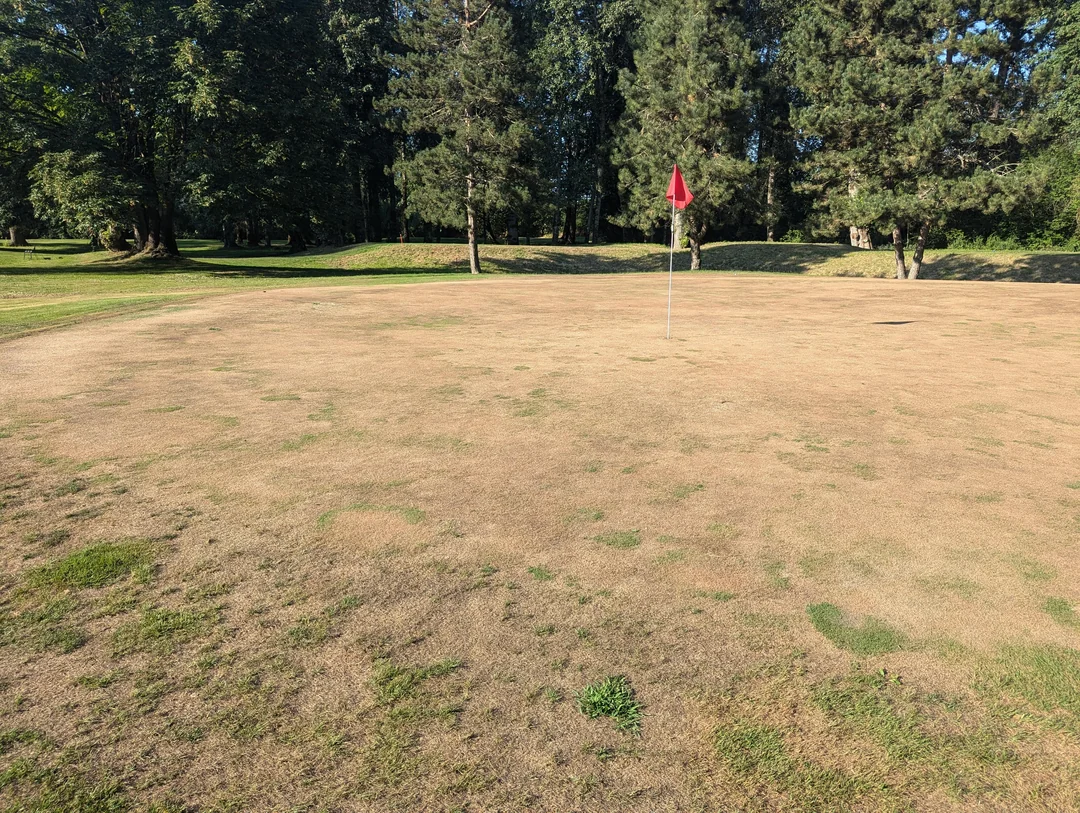
High temperatures, prolonged dry weather and restricted water availability can place significant stress on a golf course. As soil moisture falls and temperatures rise above the optimum for growth, turf recovery slows, wear becomes more visible and the risk of wilt, thinning and permanent turf loss increases.
A golf course is not one uniform surface. Greens, approaches, tees, fairways and roughs have different roles, grass species, rootzones, mowing heights and standards of presentation. They also experience different levels of traffic, shade, wind and irrigation coverage. A drought strategy must therefore prioritise water according to agronomic need and the importance of each surface to play.
Water availability is only part of the challenge. Storage capacity, abstraction limits, mains-water restrictions, irrigation-system capacity and the quality of the available water can all affect what is achievable. When resources become severely constrained, the objective may no longer be to maintain the entire course at its normal standard. A planned and controlled reduction in condition on lower-priority areas can be preferable to spreading limited water too thinly and losing critical playing surfaces.
The key is to understand the course, establish clear priorities and communicate decisions early. Here are eight practical measures that can help course managers and greenkeeping teams manage drought and extreme heat.
1. Establish the available water budget and course priorities
Before deciding how to irrigate, establish how much usable water is actually available and how long it is likely to last. Consider:
- Current reservoir, borehole or storage levels
- Abstraction licences and any temporary restrictions
- The reliable yield of the water source during extended dry weather
- Daily irrigation-system capacity and the length of the available irrigation window
- The weather outlook and likely duration of the drought
This information should be converted into a realistic water budget for the coming days and weeks. Demand should then be prioritised by surface and location rather than divided evenly across the course.
A typical priority order may be:
- Greens
- Approaches and run-off surrounds
- High-use tees
- Key fairway landing areas
- Remaining fairways and lower-use tees
- Managed rough and out-of-play areas
The correct order will vary by course. Newly established turf, shallow-rooted areas, exposed mounds, high spots and surfaces with known irrigation limitations may need to be treated as special priorities.
Where the water budget cannot sustain normal presentation standards, agree in advance which areas will receive survival irrigation only and which areas may be allowed to enter controlled dormancy. The aim is managed deterioration: protecting the long-term turf asset and the core playing experience while accepting temporary reductions in colour, density or presentation on less critical surfaces.
2. Monitor soil moisture and plant response before irrigating
Effective drought management starts with knowing how much water is available in the active rootzone. Irrigation should be based on measured conditions and plant response, not solely on a fixed schedule.
Volumetric moisture content can be used to identify drying trends, compare areas and set intervention points. However, a single percentage range is not suitable for every golf surface. A sand-based green, a push-up green and a soil-based fairway can perform very differently at the same reading. Thresholds should therefore be calibrated for each rootzone, grass species and desired surface performance.
Consistent monitoring can help teams:
- Identify greens or zones that dry more quickly than others
- Detect localised dry spot before visible wilt develops
- Target hand-watering instead of running a full irrigation cycle
- Check how deeply water has moved after irrigation
- Compare morning and afternoon moisture loss
- Build a course-specific record of safe lower and upper moisture limits
Technology such as AirGuard sensors, paired with the TurfBase Golf dashboard, can help greenkeepers monitor soil moisture in real time and compare against historic data.
If monitoring resources are limited, focus on known hot spots: south-facing slopes, exposed green edges, high points, bunker banks, shallow soils, traffic routes and areas with poor sprinkler overlap.
3. Use weather and evapotranspiration to anticipate demand
Irrigation demand is strongly influenced by evapotranspiration, or ET: the combined loss of water through evaporation from the soil and transpiration from the plant.
The highest demand normally occurs when conditions are:
hot + sunny + dry + windy
Wind can be particularly important on exposed, elevated and coastal courses because it removes the humid boundary layer around the leaf and accelerates water loss. Shaded or sheltered greens may lose water more slowly, but can face additional disease and airflow challenges.
ET data and weather forecasts are useful planning tools, but they should not be treated as an automatic irrigation prescription. Actual water demand varies with grass species, mowing height, root depth, soil type, surface cover and microclimate. Use forecast conditions to anticipate pressure, then confirm the need through moisture readings and observation on the course.
Planning ahead also allows the team to protect vulnerable surfaces before a high-risk afternoon rather than reacting after widespread wilt has developed.
4. Match irrigation timing, depth and application method to the surface
Where possible, routine irrigation should be completed in the early morning, around dawn or shortly before sunrise. Temperatures are generally lower, evaporation losses are limited and the turf canopy can dry after sunrise.
Prolonged leaf wetness can increase disease risk, particularly on closely mown greens. Evening irrigation should therefore be used carefully. If operational constraints make it necessary, consider the timing, prevailing disease pressure and how long the canopy is likely to remain wet.
The correct irrigation depth and frequency depend on the surface:
- Greens: Use measured, targeted applications to maintain the desired firmness and moisture consistency. Hand-water hot spots where possible rather than overwatering the whole green.
- Tees and approaches: Account for wear, divot recovery, slope and uneven sprinkler coverage.
- Fairways: Prioritise important landing zones and known shallow or drought-prone areas when full coverage cannot be sustained.
- Rough: Consider survival irrigation, controlled dormancy or no irrigation, depending on its importance to play and recovery potential.
Under normal conditions, irrigation should wet the active rootzone rather than repeatedly wetting only the surface. This supports deeper rooting and makes a larger soil volume available to the plant. On sand-based greens, however, large applications may drain below the rootzone before the turf can use the water. Cycle-and-soak programming, smaller targeted applications and hand-watering may provide better control.
Short, light applications can also be used for syringing during extreme heat. The purpose is to cool the leaf through evaporation, not to replenish rootzone moisture. Syringing should be based on plant need and suitable weather conditions; poorly timed applications can add humidity without delivering meaningful cooling.
System performance matters as much as scheduling. Regularly check sprinkler arcs, nozzle condition, pressure, rotation, level and distribution uniformity. An irrigation programme cannot compensate for poor coverage or hidden leaks.
5. Understand and manage water quality
Not all irrigation water has the same agronomic value. During drought, courses may become more reliant on borehole water, recycled water, surface water or blended sources. As reservoirs fall and evaporation concentrates dissolved salts, water quality can also change during the season.
Laboratory testing should be used to assess relevant factors such as:
- Electrical conductivity and total salinity
- Sodium and sodium adsorption ratio
- Chloride
- Bicarbonate and alkalinity
- pH
- Nutrient loading and potential contaminants
Poor-quality water can contribute to salt accumulation, reduced infiltration, nutrient imbalance, root stress and damage to sensitive species. The risk is often greatest on sand-based greens, poorly drained soils and sites where there is insufficient high-quality water available for leaching.
Where water quality is a concern, management may include blending sources, monitoring rootzone EC, improving drainage and infiltration, using suitable amendments where supported by analysis, and periodically leaching salts when adequate water and drainage capacity are available. Decisions should be based on water, soil and tissue testing rather than assumptions.
Water quality should also influence species selection, renovation planning and long-term decisions about which areas of the course can realistically be maintained to a particular standard.
6. Build resilience before drought and reduce stress during it
The most effective drought preparation takes place before water becomes scarce. A healthy, deep and well-distributed root system allows turf to access a larger volume of soil water and recover more effectively from stress.
Management should focus on:
- Relieving compaction and maintaining infiltration
- Managing organic matter and thatch
- Encouraging appropriate rooting through balanced irrigation and nutrition
- Selecting grass species and cultivars suited to the site and available water
- Improving drainage and irrigation coverage in known problem areas
- Reducing unnecessary shade and root competition where appropriate
Timing is important. Aggressive aeration, scarification, sand dressing or other disruptive work during severe heat can increase moisture loss and add stress when recovery potential is low. More intensive operations should be completed before the expected drought period or postponed until growing conditions improve. During drought, use low-impact interventions only where there is a clear benefit.
Traffic management can also protect weakened turf. Rotate tee markers and hole positions more frequently, redirect trolleys, manage buggy access and protect vulnerable walk-off areas. Reducing concentrated wear may be as important as adding more water.
7. Adapt mowing, nutrition and wetting-agent programmes
Maintenance standards should respond to plant health and available resources.
Where playability allows, a modest increase in mowing height can provide more leaf area for photosynthesis and reduce the stress created by very close mowing. On greens, this may be combined with rolling to retain acceptable pace without relying on increasingly aggressive mowing. Mowing frequency, grooming, brushing and other mechanical inputs may also need to be reduced during periods of acute stress.
Sharp, correctly set cutting units are essential. Poor cutting quality increases leaf damage and moisture loss and slows recovery.
Wetting agents can help improve water distribution and manage hydrophobic conditions, especially on sand-based greens affected by localised dry spot. Product selection, timing and application should be matched to the rootzone and the specific problem. They improve the effectiveness of water management but do not replace adequate irrigation or correct poor system performance.
Nutrition should support plant function without driving excessive growth. Avoid unnecessary nitrogen applications during high heat and moisture stress. Potassium has a role in plant water regulation. Rootzone EC should be monitored, particularly where fertiliser salts and marginal-quality irrigation water may combine to increase stress.
Plant growth regulators and other inputs should be reviewed in the context of current turf condition, species, weather and the course’s established programme. Avoid adding treatments simply because they are part of the normal calendar.
8. Manage deterioration deliberately and communicate with golfers
In a prolonged drought, maintaining every part of the course at its usual colour and density may be neither possible nor responsible. The course should have an agreed drought-response plan with trigger points linked to water availability, moisture data, weather forecasts and turf condition.
The plan may include staged actions such as:
- Targeting irrigation more precisely and stopping non-essential water use
- Reducing irrigation to secondary tees, fairways and rough
- Maintaining selected areas through survival irrigation only
- Allowing suitable turf to enter controlled dormancy
- Restricting traffic or temporarily adjusting play to protect vulnerable areas
- Activating a recovery and re-establishment plan when conditions improve
Controlled deterioration does not mean allowing surfaces to fail without oversight. Areas should continue to be monitored so that reversible changes in colour and growth do not progress unnoticed into loss of turf cover, weed ingress, surface instability or costly re-establishment. The acceptable level of decline should be defined for each surface, together with clear intervention thresholds.
Member and golfer expectations are a central part of drought management. Brown turf is not necessarily dead turf, and a green course is not automatically a healthier or better-playing course. Firm, dry surfaces may remain highly playable even when their appearance differs from the normal presentation standard.
Communication should begin before visible deterioration causes concern.
Explain:
- The scale of the water constraint and any legal restrictions
- Which surfaces are being prioritised and why
- The difference between dormancy, drought stress and turf loss
- How reduced water use protects the most important playing surfaces
- Any temporary effects on colour, green speed, firmness or consistency
- What golfers can do to help, such as observing traffic restrictions and repairing pitch marks
- The planned recovery approach when water and growing conditions return
Use course updates, newsletters, signage, social media and conversations with committees or key member groups. Photographs, moisture trends and simple water-use figures can make the reasoning visible and demonstrate that decisions are controlled, evidence-based and in the long-term interest of the course.
The goal: protect the course with the water available
Successful drought management is not simply about applying more water. It is about matching the available quantity and quality of water to the areas of greatest agronomic and playing importance.
A robust approach combines a realistic water budget, course-specific moisture targets, weather-informed decisions, efficient irrigation, resilient turf management and clear communication. When resources become critically limited, planned dormancy or managed deterioration on lower-priority areas may be the most responsible way to protect greens and other essential surfaces.
There is no fixed recipe for every golf course. The best strategy responds to the site’s water sources, rootzones, grass species, infrastructure, climate, playing requirements and member expectations.
Measure. Prioritise. Communicate. Protect the course.