
Technology, sustainability and the pursuit of a 10
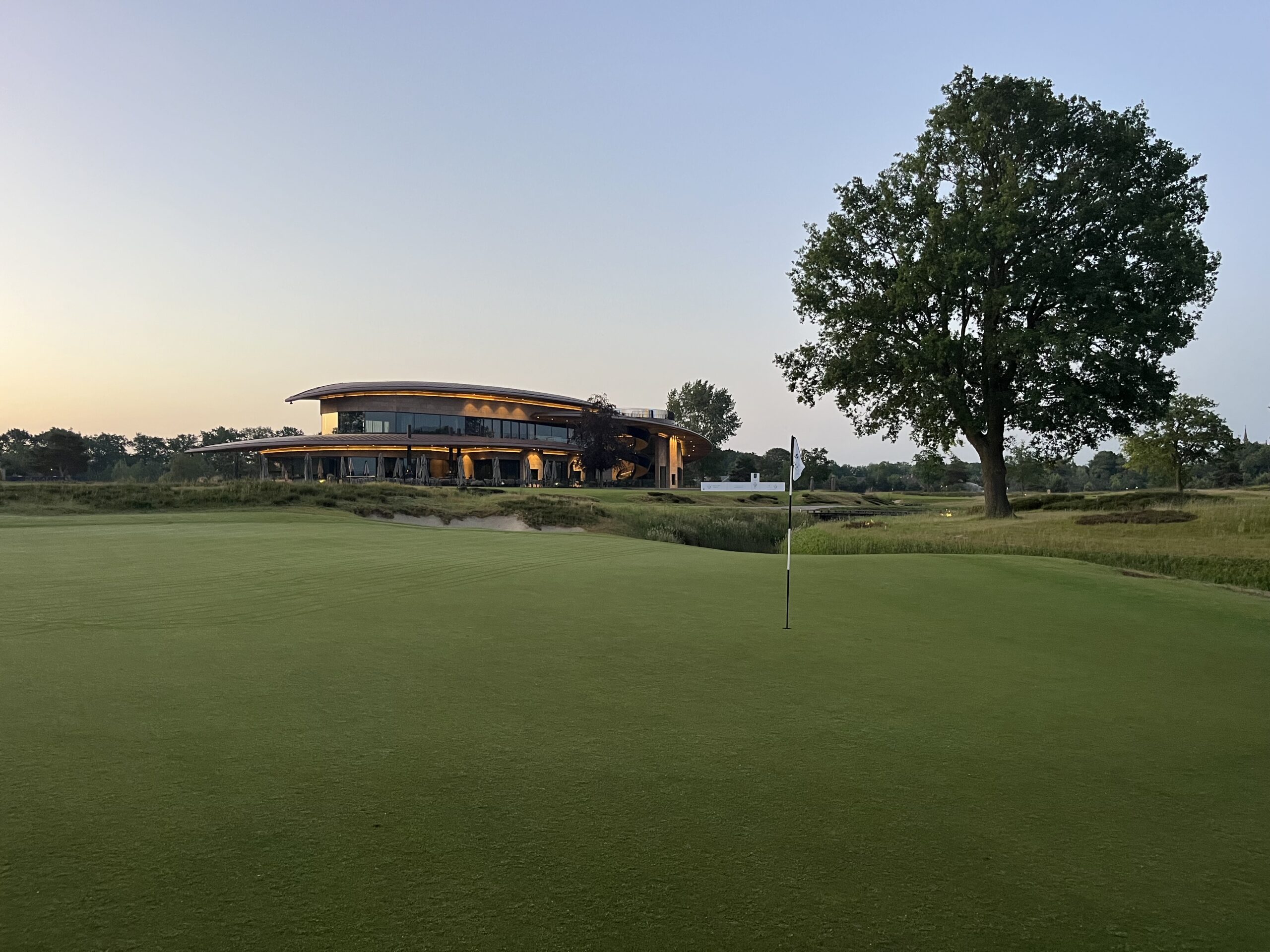
For Niall Richardson, maintaining a championship golf course is a constant pursuit of perfection. As Golf Course Superintendent at Bernardus, he and his team aim to deliver the course at the highest possible level every day, while working with nature rather than against it.
That balance is at the heart of how Bernardus approaches course maintenance. Across its 82 hectares, only 34 hectares are maintained turf, with the remainder dedicated to nature.
“You’re working with a natural product,” Niall explains. “You end up in a situation where you’re trying to manipulate the surfaces, but at the same time you’re trying to do it as sensitively as possible.”
With more than 32 years of experience in the turf industry and involvement in five construction grow-ins, Niall has seen the profession evolve considerably. His approach today combines that experience with a clear enthusiasm for technology, using tools and technology to support better decisions, improve efficiency and protect the playing surfaces.
Striving for a 10 every day
Maintaining Bernardus is a labour-intensive operation. Niall leads a team of 16 full-time greenkeepers, supported by two part-time members of the landscape team. Together, they maintain the course seven days a week, 365 days a year.
Many of the daily tasks remain highly manual. Greens and tees are hand mown, bunkers are hand raked, and parts of the surrounding nature are maintained by hand. This level of attention is part of what is required to achieve the standards expected at Bernardus.
“We try and deliver this golf course in tournament condition every day,” says Niall. “Every day we try to deliver a 10.”
But nature ultimately sets the parameters. Weather, temperature and growing conditions. A constant factor to which they must adapt.
That mindset also shapes the way Bernardus approaches sustainability. The objective is not simply to achieve the highest possible visual standard, but to do so with as little environmental impact as possible.
Electric equipment helps reduce emissions and noise, while irrigation is based on actual requirements rather than a blanket programme.
Decisions guided by information
Technology plays an increasingly important role in this approach. For Niall, the modern superintendent has access to more information than ever before, and that information can directly influence daily maintenance decisions.
“Data is a huge part of any decision that we make here,” he says.
At Bernardus, the team monitors a wide range of parameters, including soil conditions, temperature, green speed and firmness. Weather information is combined with disease prediction models, while clip yield helps determine how much nutrition the turf requires.
The result is a maintenance strategy that is planned well in advance, while remaining flexible enough to respond to changing conditions.
The team works with a three-month plan for larger projects, gradually moving towards six weeks, four weeks, two weeks and the daily schedule. Weather conditions, events and the condition of the course then determine the adjustments.
This is where the SGL ecosystem plays an important role. TurfBase Golf is SGL Golf’s data dashboard platform, built to give greenkeepers a real-time overview of turf and course conditions in one place. It pulls in data from connected sensors like AirGuard and TurfPod, covering metrics such as soil moisture, temperature and air quality.
With TurfBase, greenkeepers can spot trends, catch issues early and make maintenance decisions based on actual data instead of guesswork. The result is more efficient turf care and better-informed course management, season after season.Together, these technologies support one central objective: giving the greenkeeping team the information and tools needed to make better decisions and maintain the course at championship level.
A new approach to disease prevention
One of the clearest examples of this philosophy is GreenGuard.
Bernardus has been testing nine GreenGuard units across its 18 greens for approximately a year. The units are used every night and into the early morning, combining dew removal with UVC light treatment to prevent grass diseases.
For Niall, this addresses one of the most important moments in the daily maintenance cycle.
“Dew removal has always been one of the staples of maintenance, of greenkeeping of golf courses,” he explains. “Dew acts as an incubator for disease pressure, so removing that as quickly as possible is the most important thing in the morning.”
Traditionally, removing dew meant sending members of the team out across the course, starting at the first green and working their way around. This could mean that dew remained on greens towards the back nine well into the morning.
GreenGuard changes that process.
“With the autonomous robots going out and removing the dew, everything is clear at the same time.”
That consistency is particularly important at Bernardus, where the team operates with an extremely low reliance on fungicides. Rather than responding to disease once it has already developed, the focus is on creating conditions that help prevent disease pressure in the first place.
The UVC treatment adds another layer to that approach. Niall had previously followed the development of UVC technology on stadium pitches, but the Bernardus pilot allowed him to explore its application in golf more closely.
“Doing the research here, doing the pilot scheme, I’ve learned a lot more about it,” he says. “It’s definitely a tool that, I’d love to roll out everywhere.”
The results so far have strengthened his belief in this technology. While the GreenGuard programme remains a pilot, Niall has seen less disease pressure on the greens and values the additional peace of mind it provides.
“With having the robots, it gives me some extra peace of mind,” he says. “Removing dew off greens at four o’clock in the morning and knowing that the incubation of disease is broken on greens gives me more peace of mind.”
GreenGuard is not about replacing the greenkeeping team. It is about allowing that team to focus its time and expertise where it is needed most.
The labour involved in maintaining Bernardus is significant. Hand mowing greens alone can require five people for several hours, multiple mornings each week. Reducing the pressure on these labour-intensive routines is therefore an important part of the future of course management.
For Niall, efficiency is just one part of the equation.
Sustainability and disease prevention are the primary drivers behind the GreenGuard pilot, with labour efficiency providing an additional benefit.
Preparing for the Solheim Cup
That philosophy will be put to the ultimate test in September 2026, when Bernardus hosts the Solheim Cup from 11–13 September.
It will be the first time the Solheim Cup is held in the Netherlands, making the event a landmark moment for Dutch golf and for Bernardus.
For Niall and his team, however, preparation did not begin in 2026.
“We started preparing for this tournament three, four years ago,” he explains.
The team can draw on its experience from hosting three consecutive Dutch Opens between 2021 and 2023. Those events provided valuable experience in presenting the course under tournament conditions and understanding how the golf course responds to sustained pressure.
The preparation for the Solheim Cup is focused on maintaining the characteristics that define Bernardus rather than fundamentally changing the golf course. Firmness, green speed and uniformity will be key priorities, while the team will continue to manage the course with a strong focus on sustainability.
The timing of the tournament also creates additional challenges. Late July, August and early September can bring increased disease pressure, while summer heat and drought can put additional stress on the turf.
That makes monitoring and precision particularly important.
“We know what our challenges are during the summer with drought, the type of course that we are, and the way that we maintain the course is firm, dry, and fast.”
The course will close three weeks before the tournament, allowing the team to focus fully on the final preparation and tournament build-up. During this period, the number of people involved in getting the property ready can rise significantly.
Technology will be part of that preparation, with SGL’s solutions helping the team monitor conditions and maintain the course throughout the build-up to the event.
And GreenGuard will continue to play its role.
A partnership built for the future
For Niall, the relationship with SGL is ultimately about more than individual products. GreenGuard, TurfBase Golf and AirGuard each address different parts of course management, but together they form an ecosystem designed to give greenkeepers greater insight, control and consistency.
The technology does not replace experience. Instead, it gives experienced greenkeepers more tools to apply that knowledge.
That is particularly relevant at a championship venue like Bernardus, where the expectation is not simply to produce exceptional conditions for one tournament, but to maintain those standards every day.
For Niall, the future of greenkeeping will increasingly be defined by this combination of expertise and technology.
The goal remains the same as it has always been to produce the best possible playing surface. The difference is that the tools available to achieve that goal are changing rapidly.
And at Bernardus, Niall and his team are already putting those tools in use for a sustainable future.