
GreenGuard
- Eco-friendly grass disease control
- Autonomous midnight UVC treatment
- Saves time for other maintenance work
Thank you for your interest in GreenGuard. By completing the form, you can request a tailored quote based on your course and specific requirements. Share your details and our specialists will review your situation and get in touch to discuss the right configuration for your golf course.
"*" indicates required fields
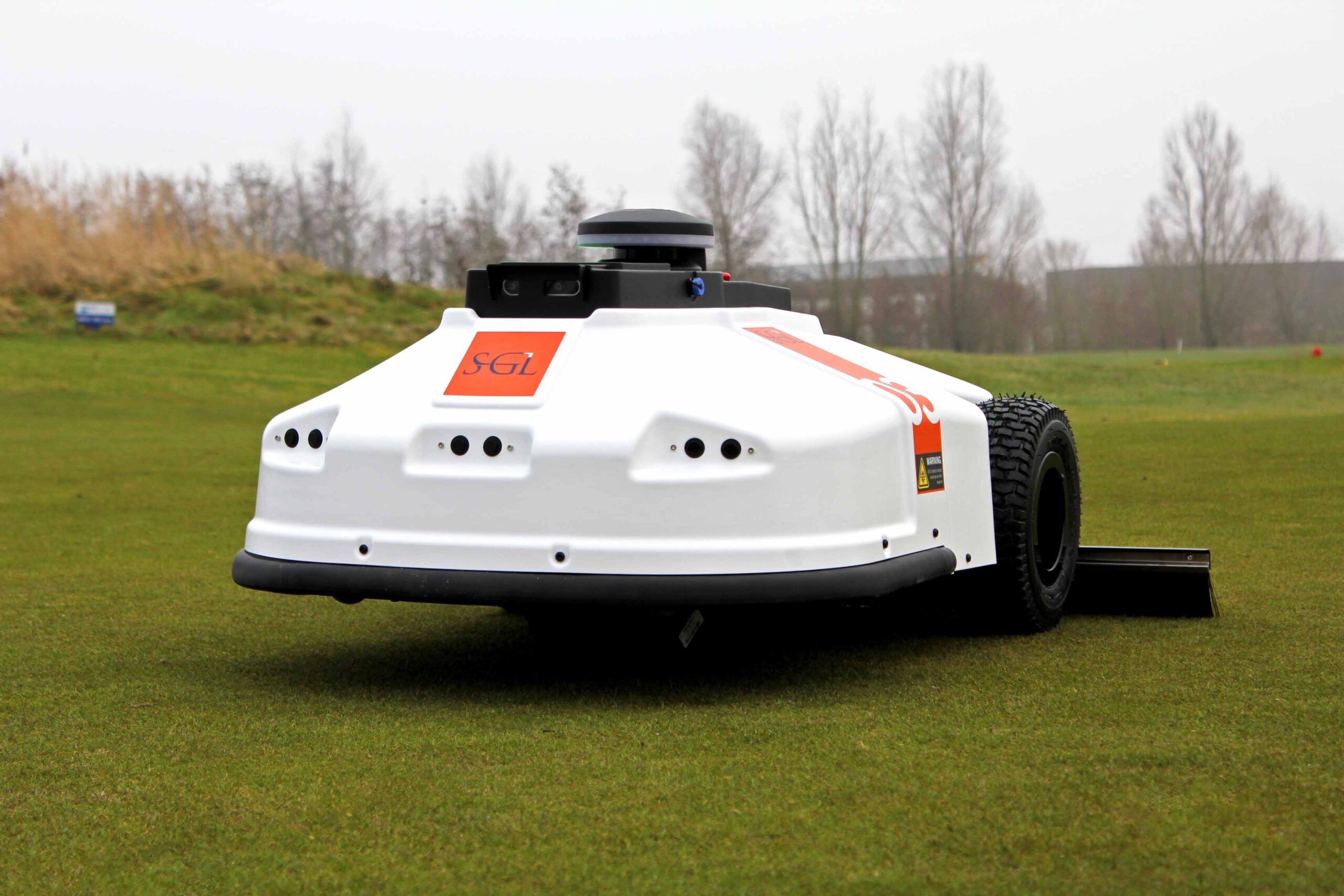
GreenGuard supports golf courses in maintaining healthy, resilient greens in a more efficient and forward-thinking way. Designed to fit seamlessly into daily course operations, it helps reduce reliance on traditional disease control methods while improving consistency and long-term turf quality. By taking a proactive approach to green care, GreenGuard helps greenkeeping teams maintain control over turf quality while managing their time and resources more effectively.


Autonomous driving
GreenGuard’s robot navigates your course independently using advanced 2D LiDAR and GPS technology. It moves from green to green along pre-set boundaries, avoiding obstacles, and delivering precise disease prevention without human intervention while returning automatically to its charging station.

Allocated green treatment
Target specific greens with precision using GreenGuard. Each treatment is confined to designated sections, ensuring only intended surfaces receive UVC protection. This allows greenkeepers to focus resources efficiently, maintain optimal turf health, and preserve the quality and appearance of the entire course.

Dew sweeper
The GreenGuard dew sweeper is an add-on attached to the autonomous robot, tackling heavy morning moisture that can fuel rapid fungal growth. By sweeping dew directly during treatment, it ensures UVC applications remain fully effective while reducing manual labour for greenkeepers. This optional feature helps maintain healthy, safe, and ready-to-play putting surfaces, seamlessly integrated into the GreenGuard workflow.

How UVC light protects your green
UVC light effectively destroys the DNA of actively growing fungi. As a result, the fungi die before they can cause any damage to your green. This reduces the disease pressure on your golf course and lowers the risk of outbreaks.
Importantly, grass cells are much more resistant to UVC light than fungal cells. That’s why GreenGuard radiates a carefully calibrated dose: strong enough to eliminate fungal cells, but safe for the grass.
UVC radiation has been used for over 40 years to disinfect water, air, pharmaceutical products, and surfaces.
How it works
Microorganisms like fungi and viruses contain genetic material: DNA or RNA. DNA molecules consist of two strands held together by four bases: adenine (A), cytosine (C), guanine (G), and thymine (T). When exposed to UVC light (200–280 nm), the light penetrates their cell walls and disrupts the DNA, specifically targeting the thymine bases.
This damage prevents the fungi from reproducing, effectively stopping the disease before it starts and helping you maintain healthy, high-quality greens.
The science behind UVC light
The sun emits radiation across a range of wavelengths. Some of this radiation is visible to the human eye, for example, the light that forms the colours of the rainbow.
Beyond the violet end of the visible spectrum lies Ultraviolet (UV) radiation. Our eyes cannot perceive this type of light because of its shorter wavelength and higher frequency compared to visible light.
UV radiation is divided into three types:
- UVA
Has the longest wavelength. It passes through the ozone layer and reaches the Earth’s surface. UVA is the least harmful type of UV light and is often referred to as “black light.” - UVB
Responsible for causing sunburns and increasing the risk of skin cancer with prolonged exposure. Around 95% of UVB radiation is absorbed by the Earth’s ozone layer. - UVC
The most intense type of UV light for living organisms. Fortunately, UVC is completely absorbed by Earth’s atmosphere. Because of its germicidal properties, UVC is widely used to disinfect air, water, and surfaces, effectively killing harmful microorganisms.
TurfBase Golf: the data brain of your course
TurfBase Golf is the central data and insight platform supporting GreenGuard operations on the course. It collects, organises, and visualises all treatment and operational data generated by the autonomous UVC robot, creating a clear and structured overview of green performance. By translating this data into accessible insights, TurfBase Golf helps greenkeepers monitor activity, track trends over time, and evaluate the impact of treatments. The platform brings clarity and consistency to GreenGuard workflows, supporting confident, data-driven decisions while fitting seamlessly into daily course management.

Technical specifications
| Treatment size / green size | Max. 2 x 8,000 ft² |
| Driving speed | 1.9 mph |
| Autonomous range | 3 miles |
| Weight | 88 lb |
| Dimensions | 42″ (L) x 27″ (W) x 22″ (H) |
| Voltage | 43 V |
FAQ
The sun emits energy across a range of wavelengths. While visible light forms the colors we see, ultraviolet (UV) radiation lies just beyond the visible spectrum. UV radiation is divided into three types: UVA, UVB, and UVC. UVA, with the longest wavelength, reaches the earth’s surface. UVB is mostly absorbed by the ozone layer, with only a small amount reaching the ground. UVC, with the shortest wavelength, is completely absorbed by the atmosphere and does not reach the earth. Because of its high energy, UVC is often used for disinfection in food, air, and water applications.
For over 40 years, UVC radiation has been used to disinfect water, air, pharmaceutical products, and surfaces. Microorganisms, including fungi and viruses, possess genetic material—either DNA or RNA. DNA molecules consist of two strands bound together by four bases: adenine (A), cytosine (C), guanine (G), and thymine (T). When organisms are exposed to UVC light within the range of 200 nm to 280 nm, the light penetrates their cell walls and disrupts the DNA molecules, specifically targeting the thymine bases. Disrupted DNA becomes unable to replicate, leading to the demise of the fungi before it can harm your greens or players.
GreenGuard’s robot is a self-navigated (autonomous) machine, equipped with latest 2D LiDAR and GPS technology for advanced mapping, smart scanning and navigation. It follows pre-set boundaries defined in the system, ensuring it only treats designated areas.
LiDAR (Light Detection and Ranging) uses laser pulses to measure distances. GolfRobot’s 2D-LiDAR sensor sends out thousands of beams in a 360° arc, creating a real-time 2D map by measuring how long the beams take to bounce back. This enables precise, autonomous navigation from the docking station to the allocated green and back.
On average, one robot can treat two greens per cycle, based on standard-sized greens and typical distances between them. Larger greens may reduce this number, while multiple smaller greens located close together may allow more than two to be treated. For an exact indication, we would be happy to discuss this with you.
Download our brochure
"*" indicates required fields